
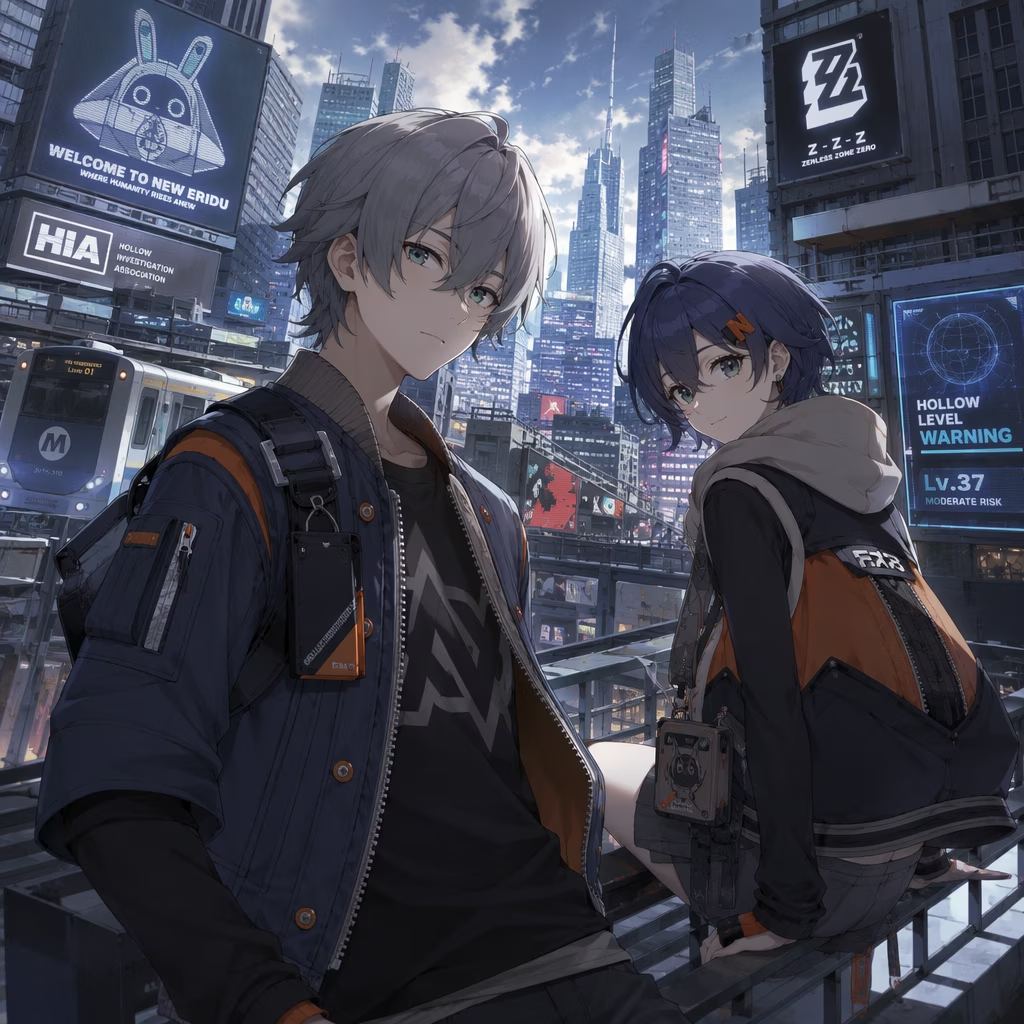
As a professional gamer who has been grinding through Zenless Zone Zero since its launch in 2024, I’ve seen the game morph from a promising urban fantasy action RPG into something that genuinely respects player time. We’re now well into 2026, and looking back at the controversial Monitor Array—what most of us just called the TV mode—it’s clear that its removal from main story content in version 1.2 was a critical turning point. That decision, announced back in September 2024, completely reshaped how I and countless other proxies experienced New Eridu.
I remember the early days vividly. The TV mode was everywhere. You’d gear up with your squad, get hyped for a combat sequence, and then suddenly you’re staring at a grid of tiles, watching slow crawl animations, solving overly simple puzzles, and waiting for a little Bangboo-like sprite to shuffle across the screen. It felt like the game was fighting itself. Combat was snappy, fluid, and visually spectacular, while the Monitor Array was this sluggish, hand-holding detour that made me check my phone during every animation cycle. The pacing was brutal. Key narrative beats that should have been high-octane showdowns became meandering board-game stretches. Even now, in 2026, I can still feel the residual frustration of having to replay those sections for missing observation data.
The development team’s candidness back then earned my respect. In that now-famous 34-minute developer video leading up to the 1.2 patch, game designer “Y” acknowledged four core pain points that echoed my own complaints almost verbatim. First, the sheer length of TV sequences was exhausting. Second, intertwining sluggish exploration with the core combat mechanic disrupted the flow state that action games thrive on. Third, the early-game proportion of TV mode was excessive—new players spent more time in the grid than in actual combat, which is a terrible first impression for a Hoyoverse title known for fast-paced brawls. Fourth, the animations themselves were too sluggish; every movement, every tile flip, every enemy encounter played out like it was wading through molasses. The team admitted that, at release, the mode
With version 1.1, Hoyoverse took the first step by letting players complete the main story without ever touching the Monitor Array. That was a relief, but version 1.2 truly buried the hatchet: all Phaethon story chapters from that point forward completely abandoned TV mode, replaced by stage-based combat missions that kept the adrenaline pumping. Future events and narrative updates followed the same philosophy. The team made it clear that consistency mattered—they would not use TV mode as a narrative delivery mechanism anymore, opting for an approach that mirrored the combat stages players log in for every day.
But here’s the nuance that many critics missed: this wasn’t a complete deletion of the Monitor Array. Hoyoverse insisted they would continue iterating on it for the subset of players who actually enjoyed the puzzle-exploration hybrid. Speeding up animations and improving fluidity started immediately in 1.1, and over the following two years, the mode has quietly evolved into an optional side activity. As of 2026, the revamped TV mode exists in standalone Hollow expeditions and special challenge events, stripped of narrative interruptions and tuned to run much faster. The
Another massive quality-of-life change that dropped with 1.2 was the Fairy Auto Explore function. If you were a completionist like me, having to manually re-run completed TV segments for missing observation data was a chore that bred resentment. Auto Explore let you dispatch the Fairy AI into previously explored areas to collect leftover rewards automatically. A few minutes later, everything would appear in your inventory. It respected my time, and frankly, it’s the only reason I ever went back to 100% those early chapters. That single feature turned a tedious bookkeeping task into a background process, and it set the tone for Hoyoverse’s future QoL philosophy—smooth convenience without dumbing down the core loop.
Version 1.2 also introduced a suite of other improvements that deserve recognition. Direct agent control in the overworld city gave a tangible sense of presence that the static map interface lacked. Hollow Zero received a direct combat mode that skipped all Monitor Array segments, letting players jump straight into the roguelike action—a godsend for time-strapped veterans. The agent accompany mode added a layer of companionship, where a chosen character would follow you around New Eridu with unique interactions and dialogue. These changes collectively signaled that the developers were listening, and they understood that the game’s soul was its combat and its characters, not the slow-moving grid.
Looking at Zenless Zone Zero in 2026, the legacy of that TV mode controversy is fascinating. It taught Hoyoverse an important lesson about how even well-intentioned experimental mechanics can severely damage a game’s onboarding and retention when they clash with the title’s primary strengths. The Monitor Array, in concept, was supposed to add a strategic dungeon-crawling layer reminiscent of classic games. In practice, it just got in the way. The 1.2 decision wasn’t just about removing a disliked feature; it was about recognizing that AAA live-service games need to let players engage with what they love without friction. I still occasionally dip into the reimagined TV challenge runs for limited-time rewards, and I appreciate it far more now because it’s no longer forced down my throat. The mode became a spice instead of the main dish.
For anyone checking into Zenless Zone Zero in 2026 for the first time, the early game is almost unrecognizable from the launch version—and that’s a triumph. The story flows cleanly from combat encounter to combat encounter, the city exploration feels alive, and the Hollow expeditions are streamlined to respect your skill rather than your patience. The TV mode removal wasn’t a surrender to criticism; it was a declaration that this game knows exactly what it wants to be: a stylish, fast-paced action RPG with heart. And as a player who stuck through the rough patches, I can confidently say that call made all the difference.